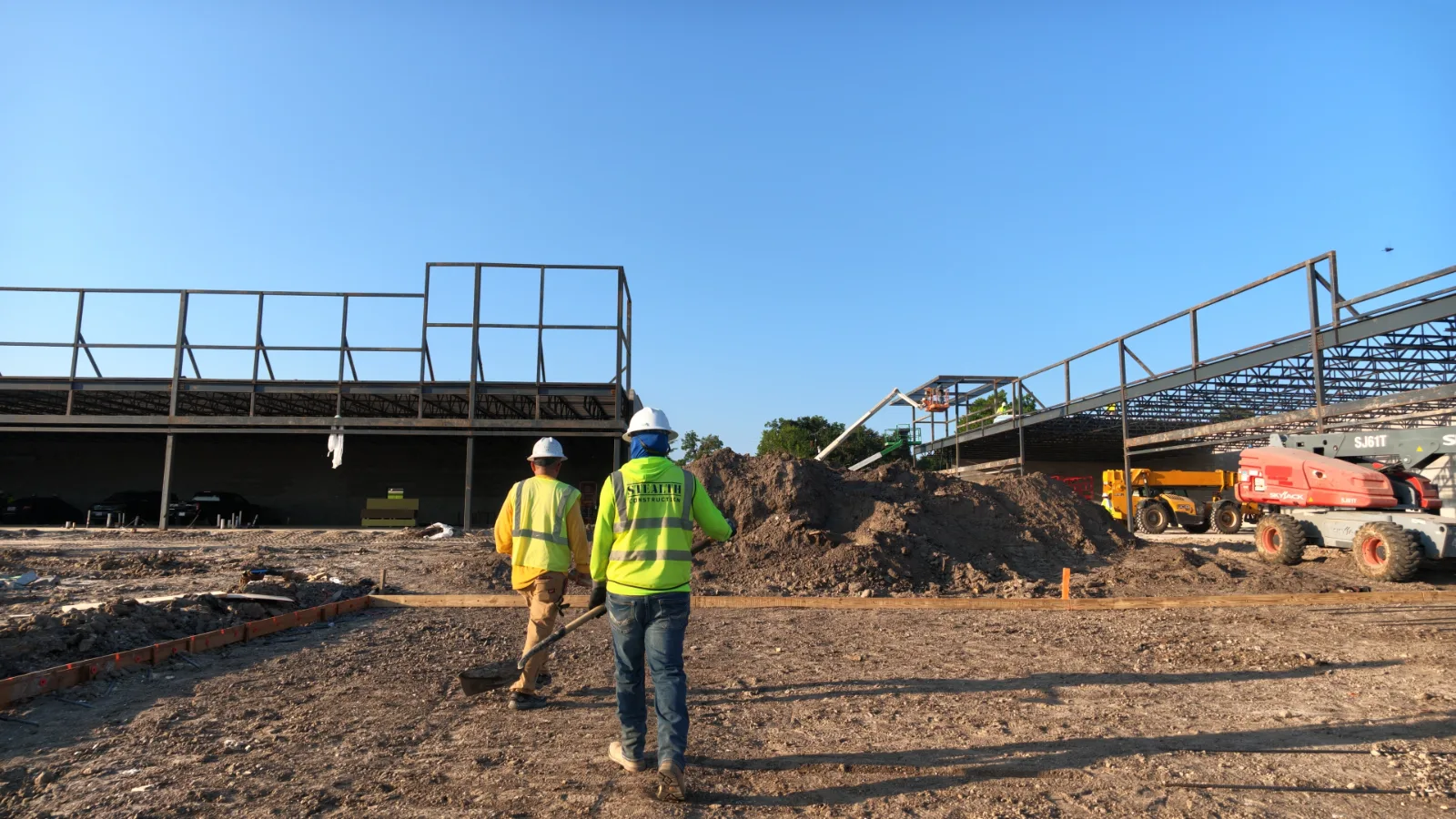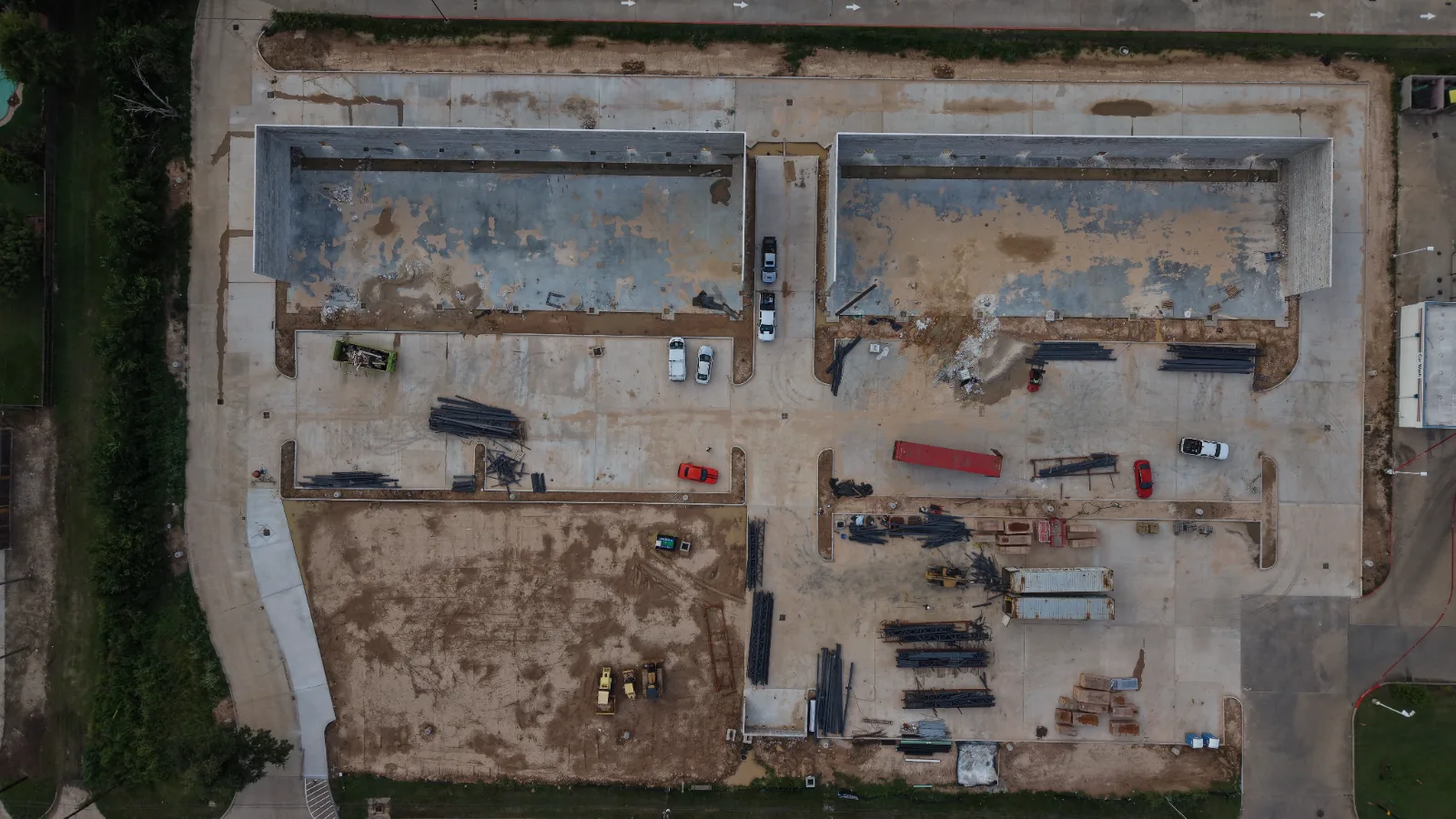
Convenience stores, fuel stations, and truck stops look simple from the road. They are among the more complicated commercial projects you can build. A c-store isn’t one building — it’s a retail structure, a fuel system, a canopy, a paving and traffic plan, a stormwater system, and a signage package, all of which have to be permitted, inspected, and commissioned by different authorities on overlapping timelines.
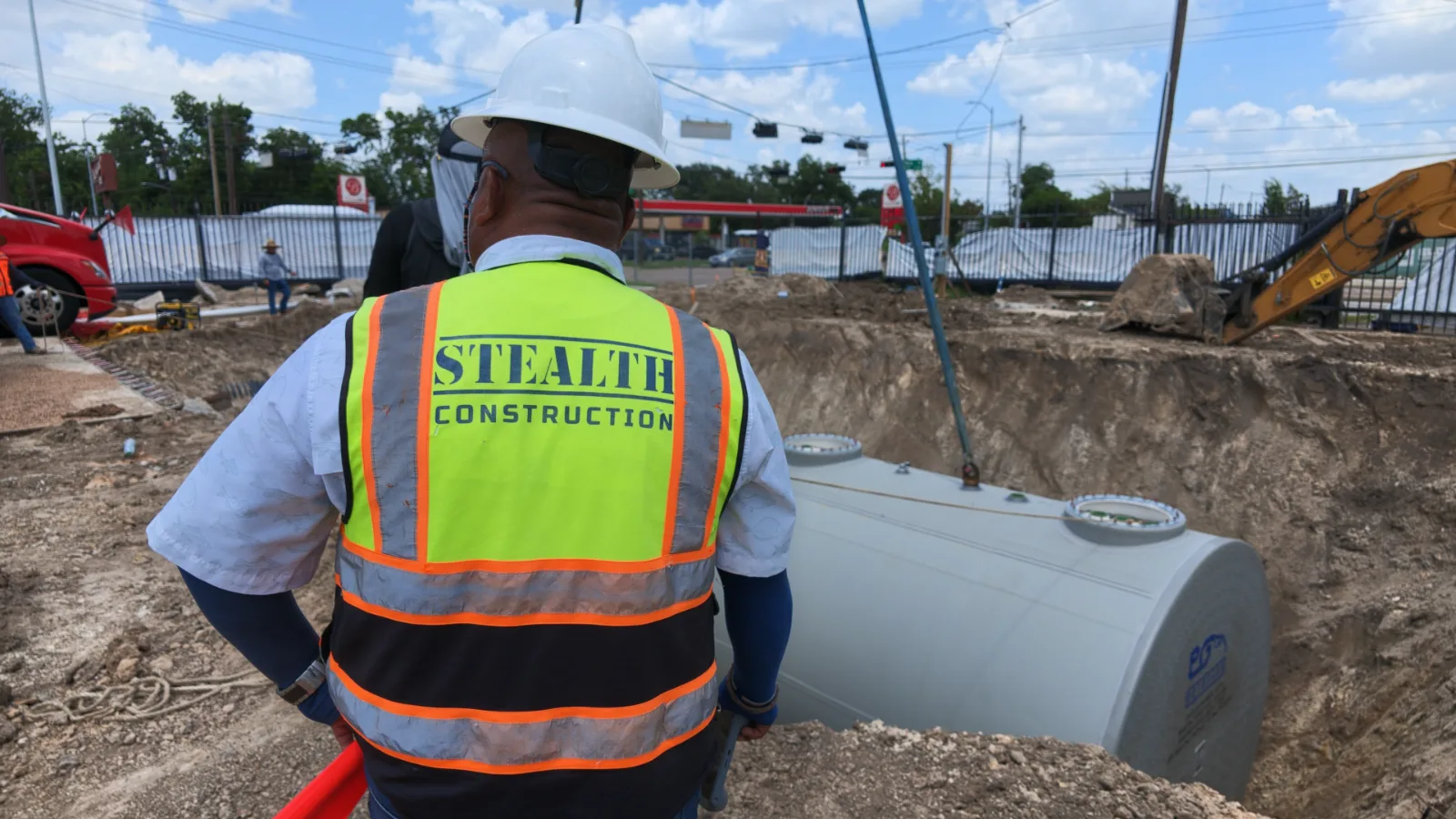
The fuel side is where most projects go sideways. Underground storage tanks, dispensers, canopies, vapor recovery, and the associated piping carry environmental and regulatory requirements that a general commercial contractor rarely deals with. Stealth Construction installs fuel systems up to 40,000 gallons in-house as part of our site work and underground utilities division, alongside the water, sewer, and storm work the site needs anyway. That matters because tank work and utility work occupy the same ground at the same time, and coordinating them across two separate subcontractors is exactly how schedules slip a month.
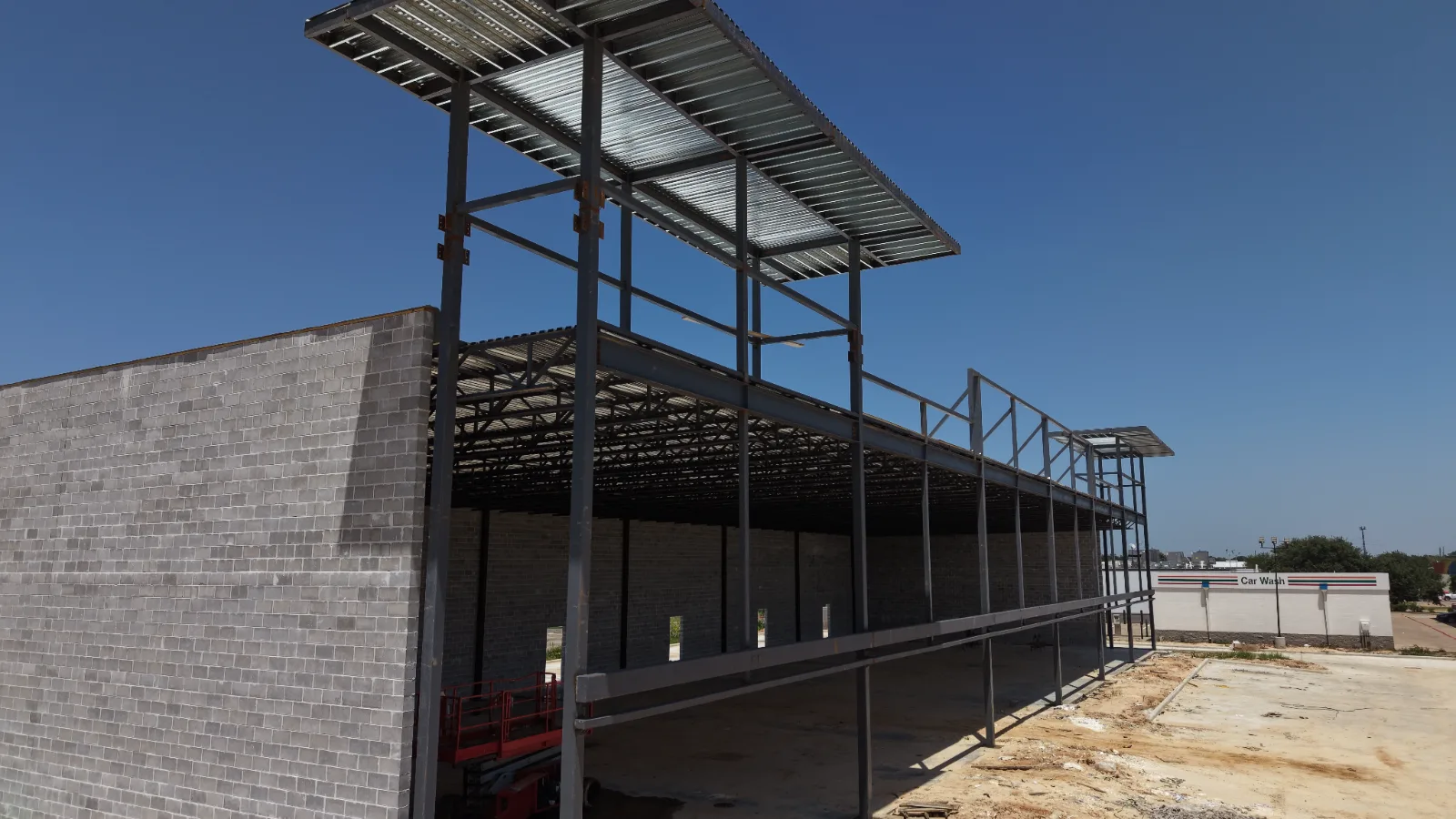
Site circulation is the second thing owners underestimate, especially on truck stops and travel centers. Turning radii for eighteen-wheelers, fuel island queuing, separation between passenger and commercial traffic, and heavy-duty paving sections all have to be designed in from the start. Getting it wrong doesn’t just create a construction problem — it creates a business problem that lives with the property for its entire life. Concrete paving thickness and jointing on a truck stop apron is a very different calculation from a retail parking lot.
Then there’s everything above grade: the building shell, the interior build-out, coolers and FF&E, storefront and glazing, the pylon sign that has to clear height and setback requirements and get its own permit. Stealth self-performs the vertical construction, MEP, interior finishes, and signage, which means the same team that set your tanks is running your build-out. One schedule, one superintendent, one company answering for the whole thing.
Fuel retail and travel centers are among the project types we build most often across the Houston region and greater Texas. If you’re evaluating a site or already have plans in hand, we’re happy to walk the deal with you and give you a realistic read on cost and schedule before you’re committed.