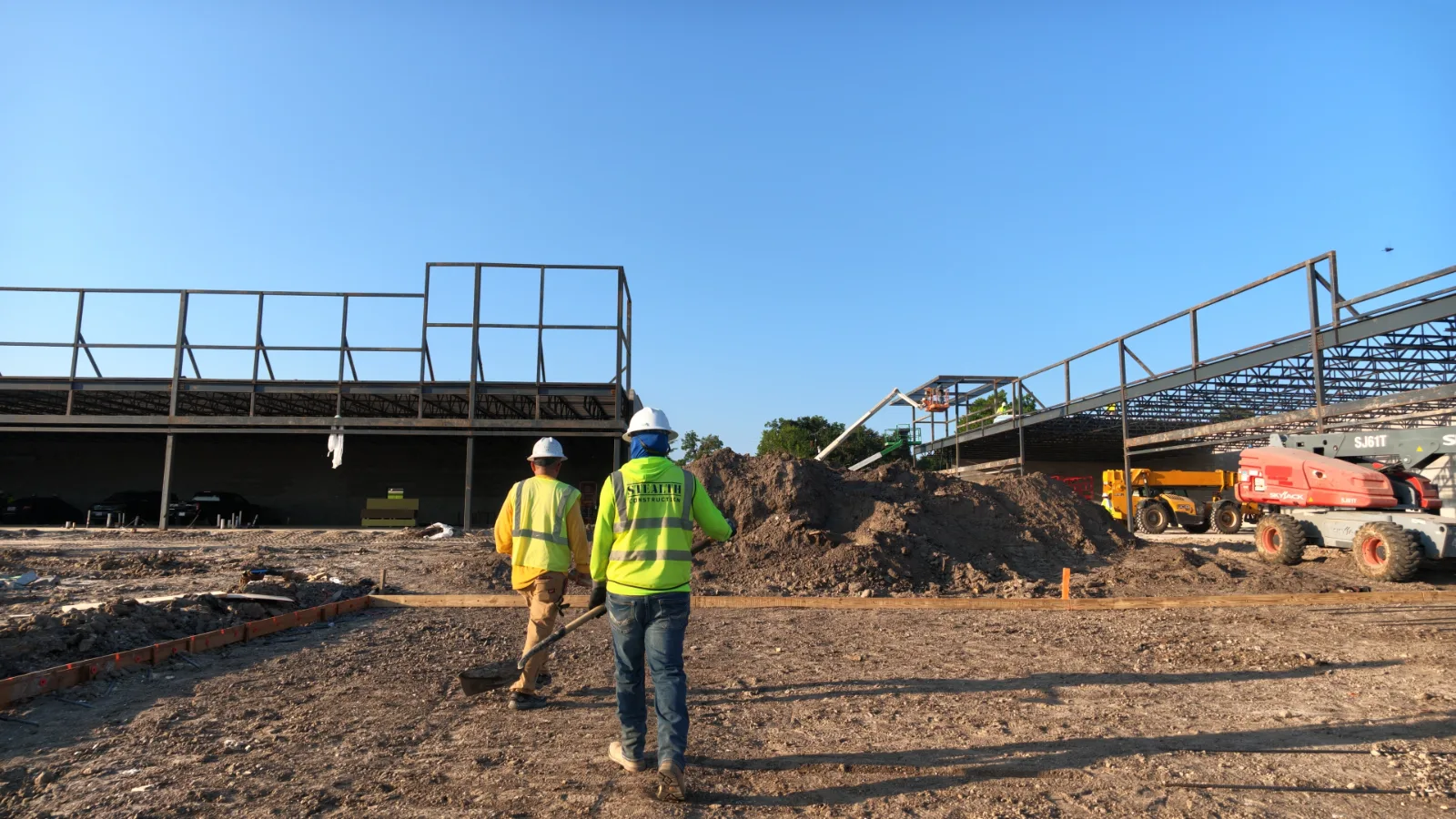
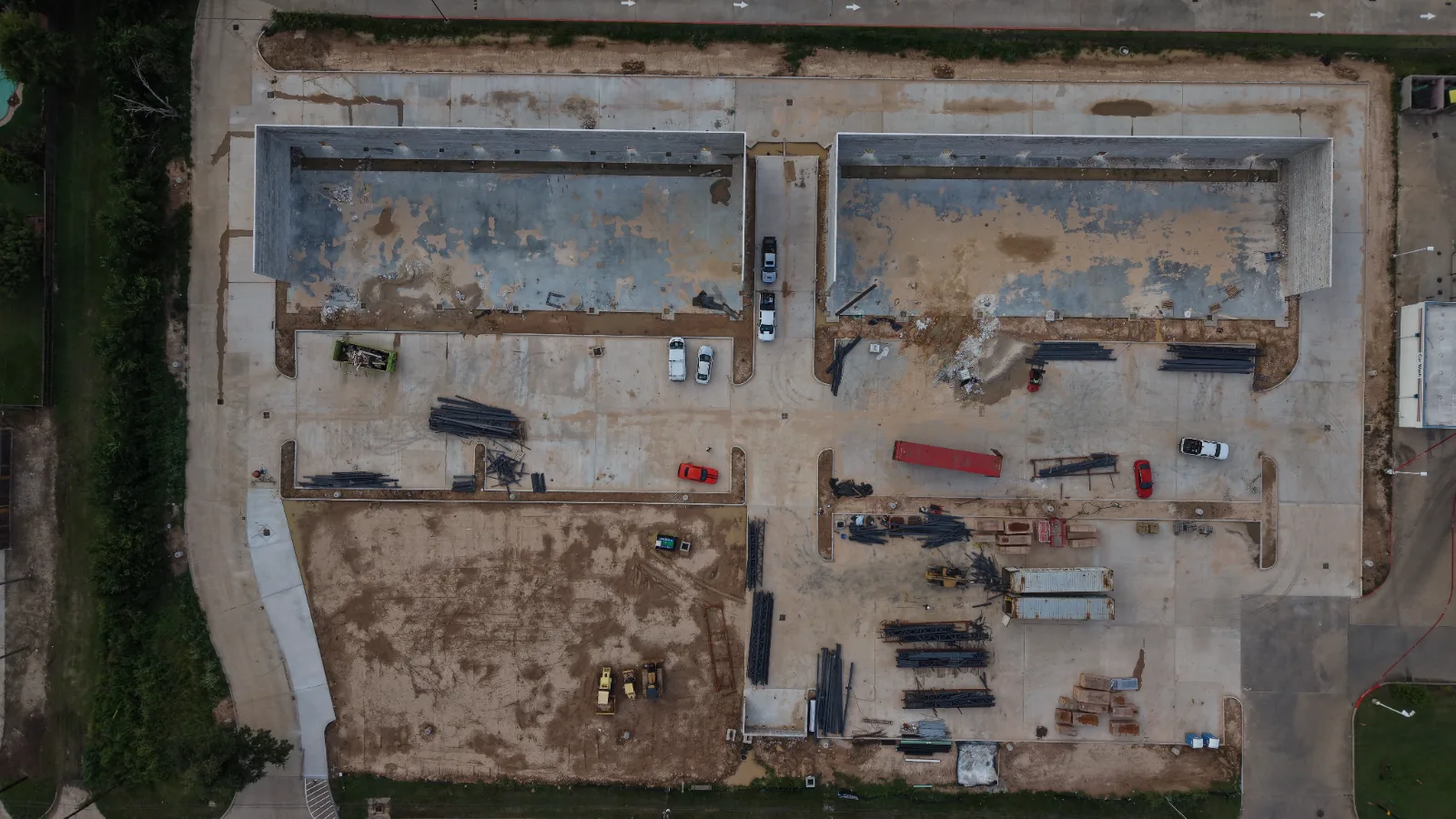
Nobody takes a photo of the finished detention pond. Owners get excited about renderings and storefronts, and site work gets treated as the boring part you have to get through first. But in the Houston area specifically, what happens below grade is the single most common reason commercial projects run late and over budget.
The Gulf Coast gives us expansive clay soils that swell and shrink with moisture, a water table that shows up sooner than out-of-state developers expect, and rainfall that turns a poorly sequenced site into a month-long delay. Layer on the drainage and detention requirements that govern development across Harris County, Fort Bend County, and the surrounding jurisdictions, and site work becomes a genuine engineering problem rather than a matter of moving dirt from one place to another. Cut and fill balance, subgrade preparation, moisture conditioning, and select fill decisions made in week two determine whether your slab performs for thirty years or cracks in three.
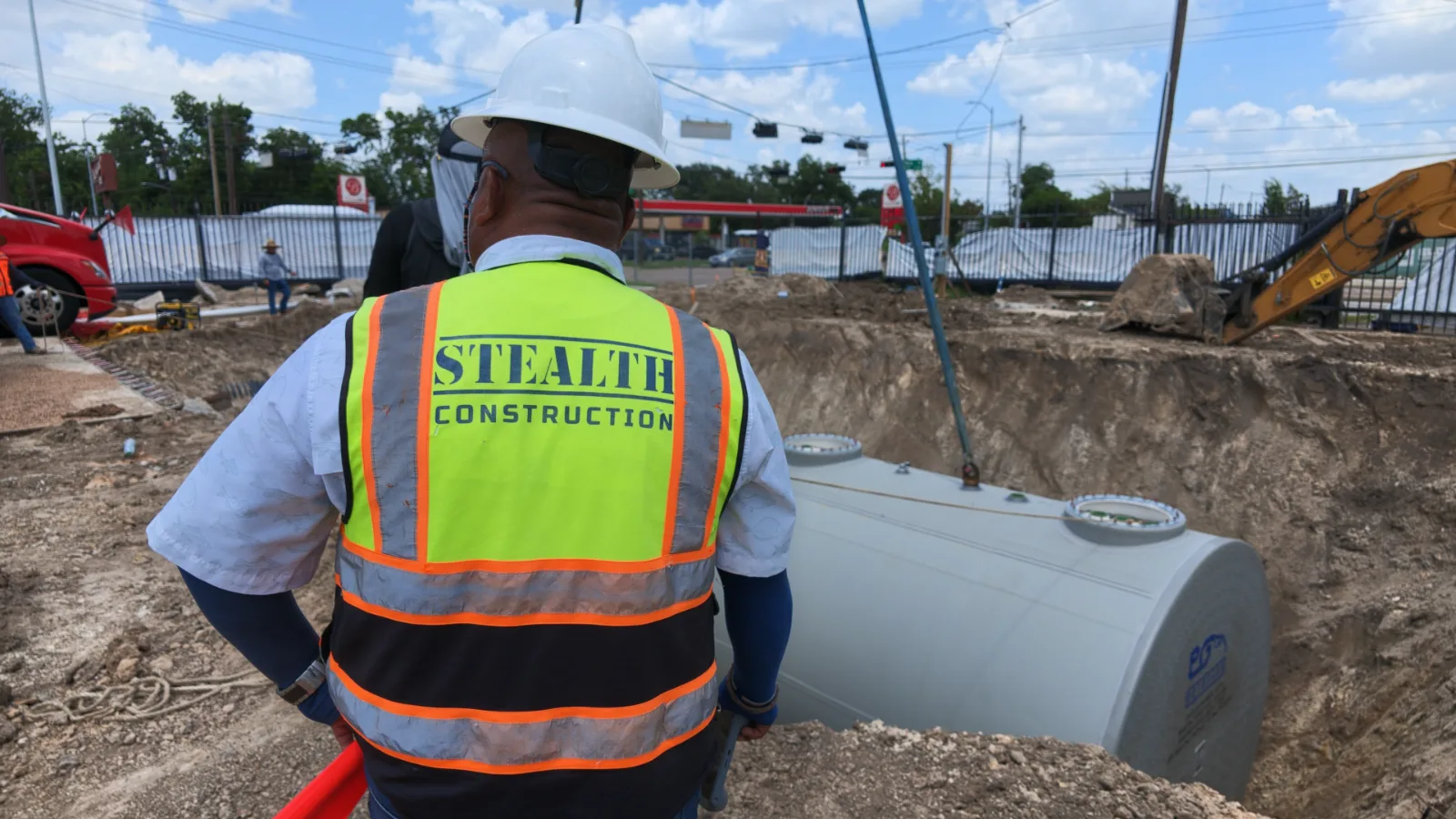
Utilities compound the problem. Water, sewer, and storm all have to be located, sequenced, and inspected in a specific order, and each one is a potential gate on everything that follows. If your storm line is waiting on a county inspection, your paving isn’t happening, which means your building materials have nowhere to stage, which means your vertical crew is standing around. On projects where the underground is subcontracted and the GC is managing from a distance, these gates turn into weeks.
Stealth Construction self-performs the entire dirt-to-pad scope: earthwork, grading and excavation, water, sewer and storm utilities, detention and drainage, demolition, asphalt and concrete paving, and fuel systems where the project calls for them. We run our own hauling fleet and supply our own material, which means we’re not waiting on a trucking broker when the weather window opens and we need to move dirt now. When the forecast gives us three dry days, we use all three.
The practical benefit is that the same company that put the pipe in the ground is the one pouring your foundation and standing up your building. There’s no gap in the schedule where responsibility transfers and momentum dies. If you’re planning a commercial or industrial project anywhere in the greater Houston area, get a contractor involved before your civil drawings are final — the savings available at that stage are almost always larger than anything you’ll find later.